DZY loves Physics, and he enjoys calculating density.
Almost everything has density, even a graph. We define the density of a non-directed graph (nodes and edges of the graph have some values) as follows:
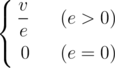
where
v
is the sum of the values of the nodes,
e
is the sum of the values of the edges.
Once DZY got a graph $*G*$, now he wants to find a connected induced subgraph $*G*'$ of the graph, such that the density of $*G*'$ is as large as possible.
An induced subgraph $*G*'(*V*', *E*')$ of a graph $*G*(*V*, *E*)$ is a graph that satisfies:
 ;
- edge
 if and only if
 , and edge
 ;
- the value of an edge in
$*G*'$is the same as the value of the corresponding edge in$*G*$, so as the value of a node.
Help DZY to find the induced subgraph with maximum density. Note that the induced subgraph you choose must be connected.

Input
The first line contains two space-separated integers $*n* (1 ≤ *n* ≤ 500)$,  . Integer
$*n*$ represents the number of nodes of the graph $*G*$, $*m*$ represents the number of edges.
The second line contains $*n*$ space-separated integers $*x*_{*i*} (1 ≤ *x*_{*i*} ≤ 10^{6})$, where $*x*_{*i*}$ represents the value of the $*i*$-th node. Consider the graph nodes are numbered from $1$ to $*n*$.
Each of the next $*m*$ lines contains three space-separated integers $*a*_{*i*}, *b*_{*i*}, *c*_{*i*} (1 ≤ *a*_{*i*} < *b*_{*i*} ≤ *n*; 1 ≤ *c*_{*i*} ≤ 10^{3})$, denoting an edge between node $*a*_{*i*}$ and $*b*_{*i*}$ with value $*c*_{*i*}$. The graph won't contain multiple edges.
Output
Output a real number denoting the answer, with an absolute or relative error of at most $10^{ - 9}$.
Note
In the first sample, you can only choose an empty subgraph, or the subgraph containing only node $1$.
In the second sample, choosing the whole graph is optimal.
样例
1 0
1
0.000000000000000
2 1
1 2
1 2 1
3.000000000000000
5 6
13 56 73 98 17
1 2 56
1 3 29
1 4 42
2 3 95
2 4 88
3 4 63
2.965517241379311
题面与样例版权归 Codeforces 及出题人所有;中文翻译由 AI 生成(CI 管线),如有出入请以原文为准。